As ransomware attacks become more sophisticated and much more common, maintaining a secure, compliant, and resilient data resilience environment is essential. The threat is only increasing with AI driving ransomware.
Did you know that RaaS – Ransomware-as-a-Service – now operates as a "legitimate" SaaS business? Developers create ransomware, affiliates deploy it, and even initial access brokers sell entry points into networks—lowering the technical barrier to entry for cybercrime1. Plus, these criminals are using AI1 to make the threats faster, more creative, and more dangerous.
Did You Know?
83% of phishing emails in 2024 used AI technology in some form, with 78% of people opening AI-generated phishing emails2
Ransomware attacks that took 9 days in 2021 now can complete in as little as 25 minutes2
Defend Data With Modern Ransomware Protection
As ransomware threats continue to evolve, Arcserve is constantly building stronger defenses to help you protect data. Staying current on new releases is essential to benefit from malware detection, AI-driven anomaly detection in backup data, and encryption alerts for backup data—all signals that ransomware may have infected your backups.
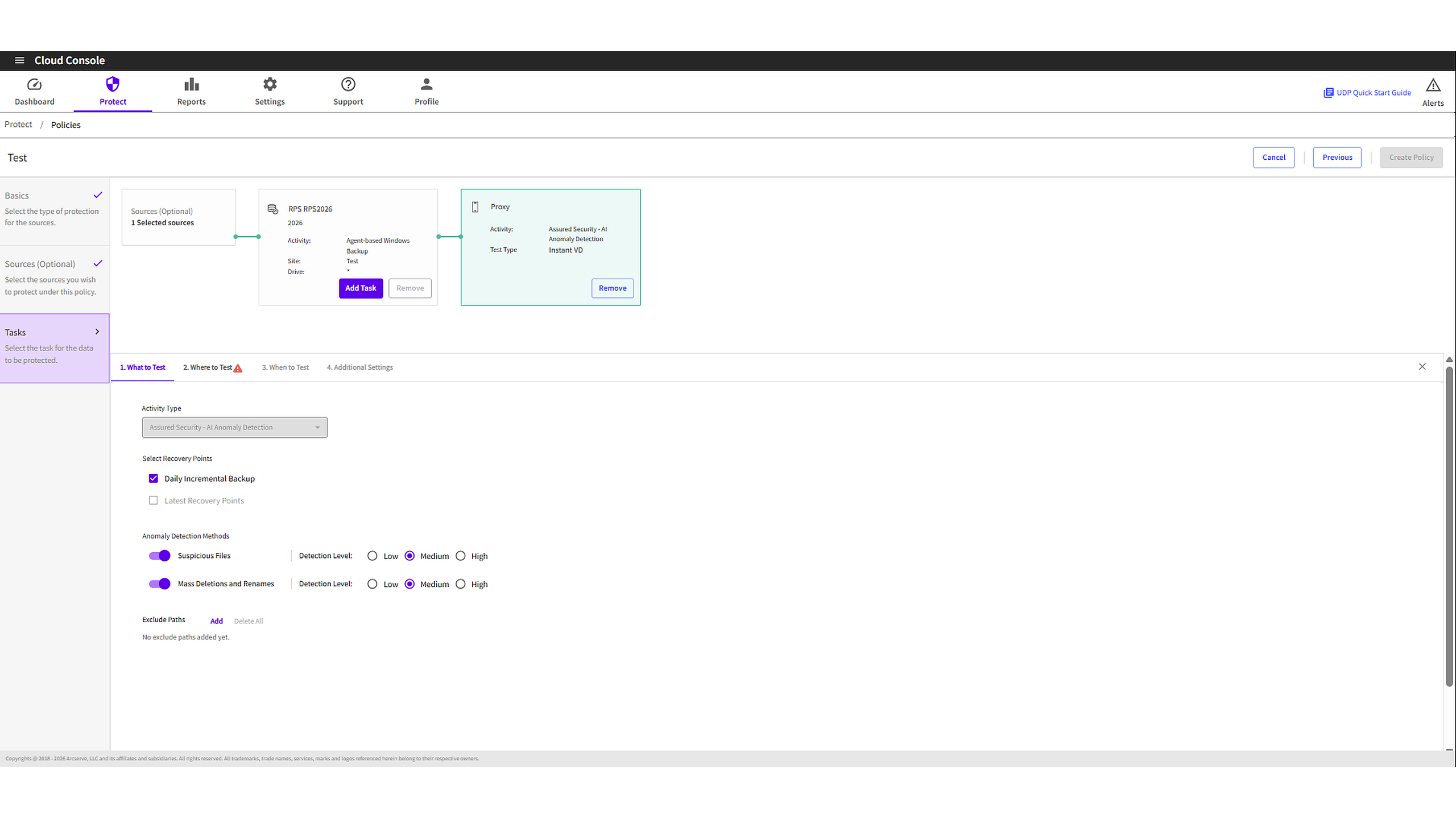
Like most software companies, Arcserve is investing in AI to help you deliver with speed and intelligence. UDP 10.3 introduced two critical AI features:
- AI-Driven Anomaly Detection: Automatically highlight existing backup recovery points exhibiting unusual patterns in file activity, such as bulk deletions and bulk renaming. Alerting teams to potential insider threats or stealth ransomware activity, AI helps customers have confidence that their backup data is being observed and protected.
- Encryption Recognition: Quickly identify mass encryption attempts in existing backups, providing critical early-warning alerts. This additional source of threat detection enhances the existing malware detection infrastructure already in the UDP data resilience platform.
You’ll also see the introduction in Arcserve UDP of an AI feature5 designed to detect, score, and trigger high‑confidence engagement moments at the system level. Also, to help busy IT leaders quickly solve data resilience questions, a new natural‑language chatbot supports queries, delivers quick insights into the current state of the Arcserve backup infrastructure, and offers guided navigation for tasks.
Defend Data With Modern Ransomware Protection
Alignment With Immutable Storage Options
Immutable Storage – On-Premises or Cloud-Based
The very popular new Arcserve Cyber Resilient Storage product is a simple optional solution that integrates directly into Arcserve UDP—no additional vendors, contracts, or management consoles required. Because it’s fully managed within UDP, organizations get streamlined administration and a unified experience.
Every organization has data that belongs in immutable storage: payroll and human resources records, manufacturing designs, proprietary information, or anything governed by compliance, regulations like HIPAA, or intellectual‑property requirements.
Immutable storage provides an essential layer of protection against ransomware and is a requirement in many industries with strict or recurring compliance obligations. It’s an easy, fast enhancement to any UDP environment—and an investment that delivers significant value when you need to ensure reliable, uncompromised recovery.
Simple Cloud Storage Integration
For small or midsize organizations that do not yet have a cloud storage option—or are unhappy with their current expensive cloud storage or on-premises storage options—current UDP versions also support an integrated cloud storage option.
Arcserve Cloud Storage was introduced with Arcserve UDP 10.2 to provide easy, integrated cloud storage managed from a simple drop down in your UDP interface.
Best of all, Arcserve Cloud Storage is pre-configured, meaning very minimal setup and fast access to a network of global cloud data centers.
Plus, organizations who lock in a 3-year subscription to Arcserve Cloud Storage also lock in today’s price point. As IT costs keep going up, it’s a smart move to lock in longterm pricing for your subscription solutions.
Enhanced Compliance, Security and Insurance Helps Keep Data Safe
Cyber incidents are no longer a question of if—they’re a matter of when. To mitigate the financial and operational fallout of attacks, many organizations are turning to cyber insurance as a way to transfer risk. From ransomware and data breaches to system outages, cyber insurance helps fund response efforts, provides expert guidance, and supports business continuity, minimizing downtime and preserving customer trust.
However, most cyber insurance policies require that backup environments run the latest available software versions to ensure security controls and protections are fully up to date.
Policies also increasingly mandate best‑practice data protection measures, such as immutable backups, secure‑by‑default configuration, and recovery‑focused—not backup‑focused—operations. Many insurers now require a tested, automated, and auditable backup strategy to validate resilience.
Maintaining strong data resilience begins with staying current. Updating to the latest software releases helps ensure critical software vulnerabilities are patched, plus reduces exposure to ransomware and other threats. It’s also essential for maintaining cyber insurance eligibility and overall corporate insurance coverage. Falling behind on backup software updates increases risk and, in some cases, can even jeopardize coverage when an incident occurs.
By keeping systems current, organizations strengthen their cyber posture, support insurance compliance, and improve their ability to recover swiftly when disruptions arise.
Multi-Hypervisor Support
The latest UDP versions have support for the most recent hypervisor releases, including VMware, Microsoft Hyper-V, Nutanix AHV, and Red Hat, with more vendor support planned soon.
UDP customers looking to switch from an expensive hypervisor environment to a more economical solution should also plan a path to upgrade and renew Arcserve UDP maintenance subscriptions to take advantage of expanded multi-hypervisor support as it becomes available.
What Makes Immutable Storage Vital for Ransomware Protection?

The basic immutable characteristics vary by platform, they generally involve:
-
Write-Once Permissions – Data is written to a block, object, or file system in a state that is locked.
-
Retention Policies – Set a specific data retention period, such as 30 days, 7 years, or indefinite.
-
Tamper-Proof Metadata – System-level controls prevent modifications—even by root/admin accounts.
-
Verifiable Audit Trails – Login access or attempted modification to truly understand how backups are being touched.